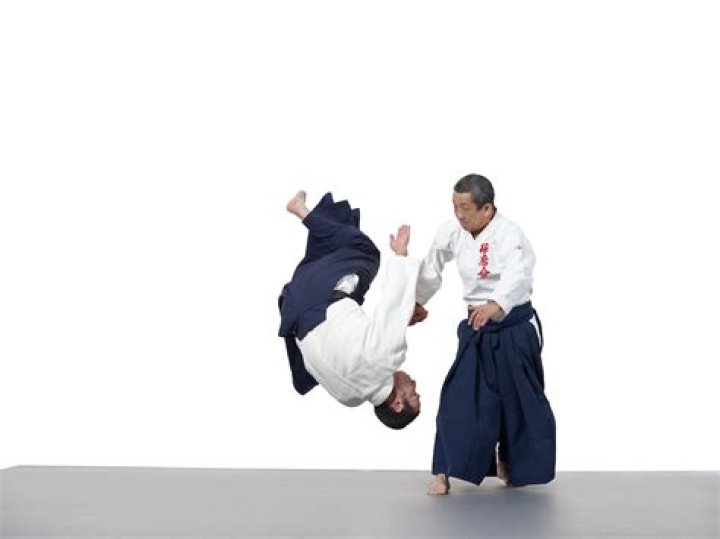
What is Aiki Height? Aiki height is a concept in the Japanese martial art of aikido that refers to the ability to maintain a balanced and stable posture while moving and executing techniques. It is essential for effective aikido practice, as it allows practitioners to generate power and control their opponents without becoming unbalanced or losing their footing.
To achieve aiki height, practitioners must maintain a relaxed but upright posture, with their feet shoulder-width apart and their knees slightly bent. They should keep their center of gravity low and their spine straight, and they should avoid leaning forward or backward. When moving, practitioners should keep their weight distributed evenly between their feet and should step lightly and smoothly, avoiding any sudden or jerky movements.
Aiki height is important for aikido practitioners because it allows them to generate power from their entire body, rather than just their arms or legs. It also helps them to maintain their balance and control their opponents, even when they are being attacked from multiple directions. Additionally, aiki height can help to prevent injuries, as it reduces the risk of falling or being thrown.
The concept of aiki height is not unique to aikido, but it is particularly important in this martial art because of its emphasis on circular movements and blending with the opponent's energy. By maintaining aiki height, aikido practitioners can move fluidly and efficiently, and they can generate power and control without becoming unbalanced or losing their footing.
Aiki Height
Aiki height is a crucial concept in aikido, referring to the ability to maintain a balanced and stable posture while moving and executing techniques. It encompasses several key aspects:
- Balance: Maintaining aiki height requires excellent balance, allowing practitioners to move and respond to attacks without losing their footing.
- Power: Aiki height enables practitioners to generate power from their entire body, rather than relying solely on their arms or legs.
- Control: By maintaining aiki height, practitioners can control their opponents' movements and redirect their energy.
- Efficiency: Moving with aiki height allows practitioners to move fluidly and efficiently, conserving energy and maximizing their effectiveness.
- Adaptability: Aiki height enables practitioners to adapt to different situations and opponents, maintaining their balance and control regardless of the circumstances.
- Injury prevention: Maintaining aiki height reduces the risk of falls and injuries by promoting proper body mechanics and alignment.
- Martial connection: Aiki height is essential for establishing and maintaining a connection with the opponent, allowing practitioners to sense their movements and respond accordingly.
In aikido, aiki height is not merely a physical attribute but also a mental and spiritual one. It requires practitioners to be present, aware, and connected to their bodies and their opponents. By cultivating aiki height, practitioners can develop a deep understanding of the principles of aikido and become more effective martial artists.
Balance
Balance is a fundamental aspect of aiki height, enabling practitioners to maintain their equilibrium and control their movements even under pressure. Without proper balance, practitioners would be vulnerable to being knocked off their feet or thrown, making it difficult to execute techniques effectively.
- Center of Gravity: Maintaining aiki height requires practitioners to keep their center of gravity low and centered, providing a stable base from which to move and respond to attacks. A low center of gravity makes it more difficult for opponents to unbalance or throw the practitioner.
- Footwork: Proper footwork is essential for maintaining balance in aikido. Practitioners should keep their feet shoulder-width apart and slightly bent, providing a wide and stable base of support. They should also step lightly and smoothly, avoiding any sudden or jerky movements that could disrupt their balance.
- Body Alignment: Correct body alignment is also important for maintaining balance. Practitioners should keep their spine straight and their shoulders relaxed, allowing them to move freely and efficiently. They should also avoid leaning forward or backward, as this can make them more vulnerable to being unbalanced.
- Awareness: Maintaining balance in aikido also requires practitioners to be aware of their surroundings and their opponent's movements. By paying attention to their environment, practitioners can anticipate attacks and adjust their movements accordingly, helping them to maintain their balance and control.
By developing their balance, aikido practitioners can improve their overall effectiveness and reduce the risk of injury. Good balance allows practitioners to move fluidly and efficiently, generate power from their entire body, and control their opponents' movements. It is a key component of aiki height and an essential skill for any aikido practitioner.
Power
Power is a crucial component of aiki height, enabling practitioners to execute techniques effectively and control their opponents. By generating power from their entire body, rather than relying solely on their arms or legs, practitioners can move with greater strength and efficiency.
To generate power from their entire body, aikido practitioners must first develop a strong connection between their upper and lower body. This is achieved through proper footwork and body alignment, which allows practitioners to transfer power from their feet through their legs and hips, and into their arms and hands. Additionally, practitioners must learn to relax their muscles and breathe properly, as tension and shallow breathing can restrict power generation.
The ability to generate power from the entire body is essential for aikido practitioners, as it allows them to execute techniques with greater force and control. For example, when performing a throw, a practitioner can use their entire body to generate the necessary power to unbalance and throw their opponent. Similarly, when performing a joint lock, a practitioner can use their entire body to apply pressure and control the opponent's joint.
Developing the ability to generate power from the entire body takes time and practice. However, by following the principles of aikido and practicing regularly, practitioners can develop the strength and coordination necessary to execute techniques with power and control. This not only makes them more effective martial artists but also helps to prevent injuries.
Control
Control is a key component of aiki height, enabling practitioners to neutralize their opponents' attacks and execute techniques effectively. By maintaining aiki height, practitioners can control their opponents' movements, redirect their energy, and apply techniques with greater precision and power.
One of the ways that aikido practitioners control their opponents' movements is through proper footwork. By maintaining a balanced and stable stance, practitioners can move quickly and easily to avoid their opponents' attacks. They can also use their footwork to control the distance between themselves and their opponents, making it difficult for their opponents to attack effectively.
In addition to footwork, body alignment is also important for controlling opponents' movements. By keeping their bodies aligned, practitioners can generate power from their entire body and apply techniques with greater force and control. They can also use their body alignment to redirect their opponents' energy, making it difficult for opponents to maintain their balance and control.
The ability to control opponents' movements is essential for aikido practitioners, as it allows them to neutralize attacks, execute techniques, and gain a dominant position. By maintaining aiki height, practitioners can develop the skills and coordination necessary to control their opponents' movements and become more effective martial artists.
Efficiency
Efficiency is a key component of aiki height, enabling practitioners to move with greater fluidity and control while conserving energy. By maintaining aiki height, practitioners can perform techniques with less effort and greater precision, allowing them to respond to attacks more effectively and conserve their energy for extended periods.
One of the ways that aikido practitioners achieve efficiency is through proper body alignment. By keeping their bodies aligned, practitioners can generate power from their entire body and apply techniques with greater force and control. This allows them to perform techniques with less effort and greater precision, as they are not wasting energy on unnecessary movements or muscle tension.
In addition to body alignment, proper footwork is also essential for efficient movement in aikido. By maintaining a balanced and stable stance, practitioners can move quickly and easily to avoid their opponents' attacks. They can also use their footwork to control the distance between themselves and their opponents, making it difficult for their opponents to attack effectively. This allows practitioners to conserve their energy and respond to attacks more effectively.
The ability to move with efficiency is essential for aikido practitioners, as it allows them to conserve their energy and maximize their effectiveness in combat. By maintaining aiki height, practitioners can develop the skills and coordination necessary to move with greater fluidity and control, allowing them to respond to attacks more effectively and conserve their energy for extended periods.
Adaptability
Adaptability is a crucial aspect of aiki height, allowing practitioners to respond effectively to a wide range of attacks and situations. By maintaining aiki height, practitioners can maintain their balance and control even when unexpected or challenging circumstances.
- Situational Awareness
Aiki height promotes situational awareness, enabling practitioners to assess their surroundings and anticipate potential threats. By maintaining a balanced and stable posture, practitioners can quickly and effectively respond to changes in their environment, adjusting their movements and techniques as needed.
- Opponent Variation
"Aiki height" allows practitioners to adapt to different opponents, regardless of their size, strength, or skill level. By maintaining aiki height, practitioners can generate power and control from their entire body, enabling them to neutralize larger or stronger opponents and redirect the energy of smaller or faster opponents.
- Environmental Factors
Aiki height enables practitioners to adapt to different environmental factors, such as uneven terrain or slippery surfaces. By maintaining a low center of gravity and proper footwork, practitioners can maintain their balance and control even in challenging environments, reducing the risk of falls or injuries.
- Unpredictability
Aiki height prepares practitioners to handle unpredictable situations and unexpected attacks. By cultivating aiki height, practitioners develop the ability to respond instinctively and effectively, even when faced with unfamiliar or chaotic situations.
In summary, adaptability is a key component of aiki height, enabling practitioners to respond effectively to a wide range of situations and opponents. By maintaining a balanced and stable posture, practitioners can develop the skills and awareness necessary to adapt to changing circumstances, neutralize threats, and maintain control in any situation.
Injury prevention
Maintaining aiki height is crucial for injury prevention in aikido. By promoting proper body mechanics and alignment, aiki height helps to reduce the risk of falls, strains, and other injuries that can occur during training or in real-world self-defense situations.
- Proper Body Mechanics
Aiki height promotes proper body mechanics by encouraging practitioners to maintain a balanced and stable posture. This involves keeping the spine straight, the shoulders relaxed, and the center of gravity low. Proper body mechanics helps to distribute force evenly throughout the body, reducing the risk of injuries such as sprains, strains, and muscle tears.
- Improved Balance
Maintaining aiki height also improves balance, which is essential for preventing falls and other injuries. By keeping their center of gravity low and their feet shoulder-width apart, practitioners can maintain a stable base of support. This makes it more difficult for opponents to unbalance them or knock them off their feet, reducing the risk of falls and other impact-related injuries.
- Reduced Muscle Tension
Proper body mechanics and alignment, as promoted by aiki height, can also help to reduce muscle tension. When the body is properly aligned, muscles are less likely to become strained or overworked. This can help to prevent muscle strains, cramps, and other injuries that can occur as a result of excessive muscle tension.
- Enhanced Proprioception
Maintaining aiki height also enhances proprioception, which is the body's ability to sense its own position and movement. By paying attention to their body's alignment and movement, practitioners can better control their movements and avoid awkward or potentially dangerous positions. This can help to prevent injuries by reducing the risk of falls, slips, and other accidents.
In conclusion, maintaining aiki height is essential for injury prevention in aikido. By promoting proper body mechanics, improving balance, reducing muscle tension, and enhancing proprioception, aiki height helps practitioners to move safely and effectively, reducing the risk of falls and other injuries.
Martial connection
Martial connection is a fundamental aspect of aikido, referring to the ability to establish and maintain a physical and energetic connection with one's opponent. Aiki height is essential for developing martial connection, as it allows practitioners to sense their opponent's movements and intentions, and to respond accordingly.
When a practitioner maintains aiki height, they are able to keep their center of gravity low and their body relaxed, while simultaneously maintaining a strong and stable connection with their opponent. This allows them to move fluidly and efficiently, and to respond to their opponent's movements without losing their balance or control.
Maintaining martial connection is essential for effective aikido technique. By sensing their opponent's movements and intentions, practitioners can anticipate their attacks and apply the appropriate techniques to neutralize them. For example, if an opponent attempts to grab a practitioner's wrist, the practitioner can use their martial connection to sense the opponent's intention and apply a wrist lock to control them.
Developing martial connection takes time and practice. However, by maintaining aiki height and practicing regularly, aikido practitioners can develop the skills necessary to establish and maintain a strong connection with their opponents, allowing them to sense their movements and respond accordingly.
Frequently Asked Questions About Aiki Height
Aiki height is a crucial concept in aikido that encompasses balance, power, control, efficiency, adaptability, and injury prevention. Here are answers to some commonly asked questions about aiki height:
Question 1: What is the purpose of maintaining aiki height?
Maintaining aiki height serves multiple purposes in aikido. Firstly, it helps practitioners maintain balance and stability during movements and techniques. Secondly, it allows for the generation of power from the entire body, rather than relying solely on the arms or legs. Thirdly, aiki height enhances control over opponents' movements and enables the practitioner to redirect their energy effectively.
Question 2: How does aiki height contribute to efficient movement?
Proper body alignment and footwork associated with maintaining aiki height promote efficient movement in aikido. By keeping the body aligned, practitioners can generate power from their entire body and apply techniques with greater force and control. Additionally, efficient footwork allows for quick and effortless movement, enabling practitioners to avoid opponents' attacks and control the distance between themselves and their opponents.
Question 3: How does aiki height aid in injury prevention?
Aiki height promotes proper body mechanics and alignment, which helps to reduce the risk of injuries. By maintaining a balanced and stable posture with a low center of gravity, practitioners are less likely to lose their balance or fall. Furthermore, proper body alignment distributes force evenly throughout the body, reducing the risk of sprains, strains, and muscle tears.
Question 4: What is the significance of martial connection in relation to aiki height?
Maintaining aiki height is essential for establishing and maintaining a martial connection with opponents. By keeping their center of gravity low and their body relaxed, practitioners can sense their opponents' movements and intentions, allowing them to respond accordingly. This martial connection is crucial for effective aikido technique, as it enables practitioners to anticipate attacks and apply appropriate techniques to neutralize them.
Question 5: How can practitioners develop aiki height?
Developing aiki height requires regular practice and dedication. Practitioners should focus on maintaining proper body alignment, footwork, and balance in all their movements. Additionally, practicing techniques with a partner can help improve martial connection and the ability to sense and respond to opponents' movements.
Question 6: Is aiki height only applicable in aikido?
While aiki height is a concept most commonly associated with aikido, its principles can be applied to other martial arts and even everyday life. Maintaining a balanced and stable posture, as well as developing a strong connection with one's surroundings, can benefit practitioners in various disciplines and situations.
In conclusion, aiki height is a multifaceted concept in aikido that encompasses physical, mental, and spiritual aspects. By maintaining aiki height, practitioners can enhance their balance, power, control, efficiency, adaptability, and injury prevention. Developing aiki height requires consistent practice and dedication, and its benefits extend beyond the dojo, contributing to overall well-being and effectiveness in various aspects of life.
Transition to the next article section:
To further explore the principles and applications of aiki height, let's delve into the nuances of body mechanics, footwork, and martial connection in aikido.
Conclusion
Our exploration of "aiki height" has revealed its multifaceted nature and paramount importance in the practice of aikido. Aiki height encompasses not only physical attributes but also mental and spiritual aspects, contributing to the practitioner's overall effectiveness and well-being.
Through the maintenance of aiki height, practitioners cultivate balance, power, control, efficiency, adaptability, and injury prevention. These qualities are essential for executing aikido techniques effectively, responding to opponents' attacks, and maintaining a strong martial connection. By developing aiki height, practitioners not only enhance their skills within the dojo but also foster a heightened awareness and presence in everyday life.
The pursuit of aiki height is an ongoing journey that requires dedication, perseverance, and a willingness to delve into the depths of both physical and mental training. As practitioners progress on this path, they discover a deeper understanding of aikido's principles and their own potential. Aiki height serves as a constant reminder of the harmony between body, mind, and spirit, guiding practitioners towards a more balanced and fulfilling existence.
Cesar Montano's New Wife: All The Details
Is Legendary 1990s Singer Vanessa Del Rio Still Alive And Well?
Antonia Bennett: A Look At Her Life And Career
