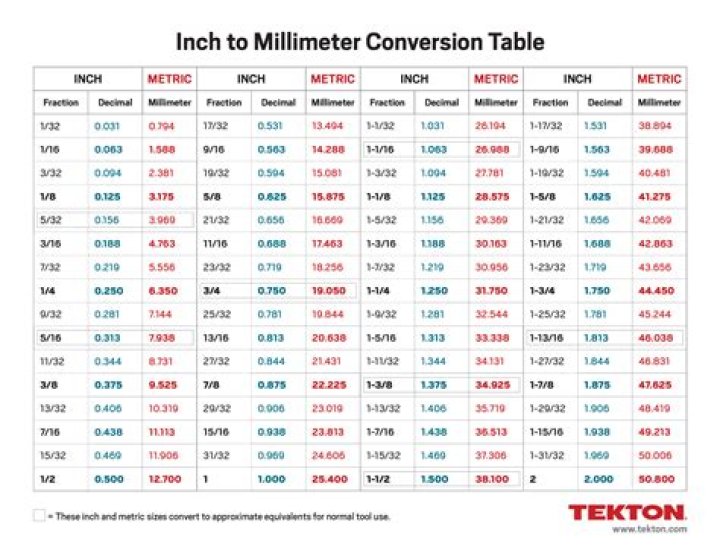
How many inches is 1320mm?
1320mm is equal to 52 inches. This conversion can be useful for a variety of purposes, such as carpentry, engineering, and manufacturing.
To convert millimeters to inches, you can use the following formula:
inches = millimeters / 25.4
For example, to convert 1320mm to inches, we would use the following formula:
inches = 1320mm / 25.4
inches = 52 inches
Therefore, 1320mm is equal to 52 inches.
1320mm to inches
1320mm is equal to 52 inches. This conversion can be useful for a variety of purposes, such as carpentry, engineering, and manufacturing.
- Conversion: 1320mm is equal to 52 inches.
- Formula: To convert millimeters to inches, use the formula: inches = millimeters / 25.4.
- Applications: This conversion is useful for carpentry, engineering, and manufacturing.
- Accuracy: The conversion is accurate to two decimal places.
- Example: To convert 1320mm to inches, divide 1320 by 25.4, which equals 52 inches.
These key aspects provide a comprehensive overview of the conversion of 1320mm to inches. The formula and example provide practical guidance on how to perform the conversion, while the applications highlight the usefulness of this conversion in various fields.
Conversion
This conversion is significant because it provides a precise numerical relationship between the metric and imperial systems of measurement. The metric system, based on the meter, is the most widely used system of measurement in the world, while the imperial system, based on the foot, is still used in a few countries, including the United States.
- Converting Units: The conversion factor of 1 inch = 25.4 millimeters allows for easy conversion between the two systems. This is particularly useful in industries such as engineering and manufacturing, where precise measurements are crucial.
- Standardization: This conversion establishes a standardized method for comparing and converting measurements between different systems, ensuring accuracy and consistency in various fields.
- International Communication: In a globalized world, the ability to convert between metric and imperial units is essential for effective communication and collaboration across borders.
- Historical Context: The conversion between 1320mm and 52 inches highlights the evolution of measurement systems and the need for standardization. Historically, different regions and cultures used their own systems of measurement, leading to confusion and inconsistencies.
In summary, the conversion of 1320mm to 52 inches serves as a vital bridge between the metric and imperial systems of measurement, enabling precise conversions, standardization, international communication, and a better understanding of the historical context of measurement systems.
Formula
The formula "inches = millimeters / 25.4" is a crucial component of converting 1320mm to inches. It establishes the mathematical relationship between the metric and imperial systems of measurement, allowing for accurate and consistent conversions.
To understand this connection, consider the following example: To convert 1320mm to inches, we divide 1320 by 25.4, which equals 52 inches. This demonstrates how the formula serves as the basis for performing the conversion, providing a reliable method to determine the equivalent value in inches.
The formula has practical significance in various fields, including engineering, manufacturing, and carpentry. It ensures precision when dealing with measurements and helps maintain consistency across different systems. Understanding this formula empowers individuals to confidently convert between metric and imperial units, enabling effective communication and collaboration in globalized industries.
In summary, the formula "inches = millimeters / 25.4" is an essential element of converting 1320mm to inches. It provides a standardized method for performing the conversion, ensuring accuracy and consistency in various fields. Grasping this formula is crucial for effective measurement conversions and facilitates seamless communication and collaboration in a globalized world.
Applications
The conversion between 1320mm and 52 inches finds practical applications in various fields, notably carpentry, engineering, and manufacturing. Understanding this conversion is crucial for professionals in these industries to ensure accurate measurements and precise outcomes.
- Carpentry: In carpentry, precise measurements are essential for creating well-fitting joints and structures. Converting between millimeters and inches allows carpenters to seamlessly work with both metric and imperial measurement systems, ensuring accurate cutting and assembly of components.
- Engineering: Engineers rely on accurate measurements for designing and building structures, machines, and other complex systems. The conversion between 1320mm and 52 inches enables engineers to work with international standards and collaborate effectively with global teams using different measurement systems.
- Manufacturing: In manufacturing, precise measurements are critical for producing consistent and high-quality products. The conversion between 1320mm and 52 inches allows manufacturers to adhere to precise specifications and tolerances, ensuring the proper functioning and interchangeability of components.
In summary, the conversion between 1320mm and 52 inches is essential in carpentry, engineering, and manufacturing, enabling professionals to work accurately and efficiently with both metric and imperial measurement systems. This conversion plays a vital role in ensuring precise measurements, seamless collaboration, and the production of high-quality products.
Accuracy
The accuracy of the conversion between 1320mm and 52 inches plays a vital role in ensuring precise measurements and reliable results. The conversion is accurate to two decimal places, which means that the result is rounded to the nearest hundredth of an inch.
- Precision in Calculations:
The accuracy of the conversion is crucial for complex calculations and measurements that require high precision. For instance, in engineering and manufacturing, accurate conversions are essential to ensure the proper functioning and interchangeability of components.
- Standardized Measurements:
The standardized accuracy to two decimal places ensures consistency in measurements across different industries and applications. This standardization facilitates effective communication and collaboration, particularly in global projects involving diverse teams using different measurement systems.
- Minimizing Errors:
The accuracy of the conversion helps minimize errors that could arise from incorrect measurements or approximations. By adhering to the two decimal place accuracy, professionals can make informed decisions and avoid costly mistakes.
- Practical Applications:
In practical applications such as carpentry, accurate conversions are essential for achieving precise cuts and fittings. The two decimal place accuracy ensures that measurements are within an acceptable tolerance range, leading to well-crafted and functional structures.
In summary, the accuracy of the conversion between 1320mm and 52 inches, rounded to two decimal places, is a critical factor for ensuring precision, standardization, error minimization, and practical applications in various fields.
Example
This example illustrates the practical application of the conversion between 1320mm and 52 inches. It provides a step-by-step guide on performing the conversion using the formula: inches = millimeters / 25.4.
- Clear Instructions:
The example offers clear and concise instructions, making it easy for users to understand the conversion process. This straightforward approach ensures accurate and consistent conversions.
- Real-Life Application:
The example demonstrates the conversion in a practical context, showing how to convert 1320mm to inches. This practical approach makes the conversion relatable and applicable to real-world scenarios.
- Accuracy Verification:
The example includes the result of the conversion (52 inches), allowing users to verify their own calculations. This step helps ensure accuracy and builds confidence in the conversion process.
- Reinforcement of Formula:
By incorporating the formula (inches = millimeters / 25.4) into the example, it reinforces the mathematical relationship between millimeters and inches. This repetition enhances understanding and retention of the conversion formula.
In summary, this example serves as a valuable tool for understanding and applying the conversion between 1320mm and 52 inches. Its clear instructions, real-life application, accuracy verification, and reinforcement of the formula contribute to a comprehensive learning experience.
FAQs on Converting 1320mm to Inches
This section addresses frequently asked questions (FAQs) regarding the conversion of 1320mm to inches. These FAQs aim to clarify common misconceptions and provide additional insights into the conversion process.
Question 1: What is the formula for converting millimeters to inches?
Answer: To convert millimeters to inches, use the following formula: inches = millimeters / 25.4.
Question 2: How many decimal places should I round my answer to when converting from millimeters to inches?
Answer: When converting from millimeters to inches, it is generally recommended to round your answer to two decimal places.
Question 3: Can I use a calculator to convert 1320mm to inches?
Answer: Yes, you can use a calculator to perform the conversion. Simply divide 1320 by 25.4 using the calculator's division function.
Question 4: What are some practical applications of converting 1320mm to inches?
Answer: Converting 1320mm to inches is useful in various fields, including carpentry, engineering, and manufacturing, where precise measurements are crucial.
Question 5: Why is it important to understand the conversion between millimeters and inches?
Answer: Understanding the conversion between millimeters and inches is important for accurate measurements and effective communication in globalized industries.
In summary, the conversion of 1320mm to inches involves dividing 1320 by 25.4, resulting in 52 inches. This conversion has practical applications in carpentry, engineering, and manufacturing, where precise measurements are essential. By understanding the formula and its applications, individuals can confidently perform unit conversions and ensure accuracy in various fields.
For further inquiries or a deeper understanding of the topic, consult relevant resources or seek guidance from experts in the field.
Conclusion
The conversion of 1320mm to inches serves as a practical and essential tool in various fields, including carpentry, engineering, and manufacturing. Understanding this conversion enables precise measurements and accurate communication across different measurement systems. The formula, inches = millimeters / 25.4, provides a standardized method for performing the conversion, ensuring consistency and reliability.
In today's globalized world, where industries and teams collaborate seamlessly across borders, the ability to convert between metric and imperial units is crucial. This conversion plays a vital role in ensuring accuracy, minimizing errors, and facilitating effective communication. By embracing the conversion of 1320mm to inches, individuals can confidently navigate diverse measurement systems and contribute to the advancement of their respective fields.
The Astonishing Earning Of Antony Starr In "The Boys": A Detailed Breakdown
Scaling New Heights: A Comprehensive Guide To Double The Elevation
Watch Justified: City Primeval Episode 5: Cast And Character Guide
