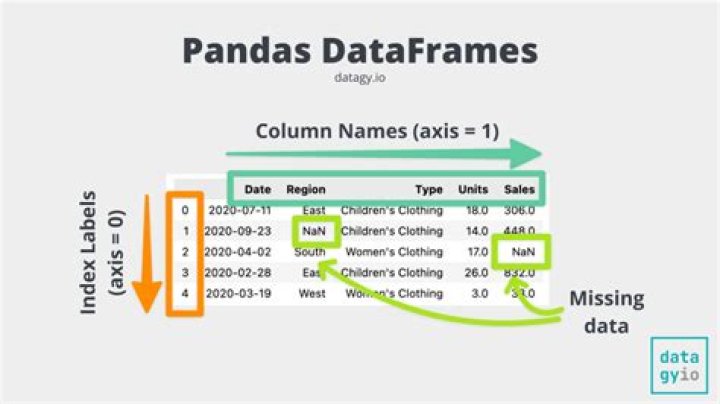
Have you ever worked with hierarchical data in pandas and wanted to flatten it out? If so, then the `droplevel` function is your friend!
The `droplevel` function removes one or more levels from a hierarchical index. This can be useful for simplifying your data or for preparing it for further analysis. For example, if you have a dataframe with a MultiIndex, you can use `droplevel` to remove one of the levels, creating a new dataframe with a simpler index.
The `droplevel` function is also useful for removing duplicate rows from a dataframe. If you have a dataframe with duplicate rows, you can use `droplevel` to remove the duplicates, creating a new dataframe with unique rows.
The `droplevel` function is a powerful tool that can be used to simplify your data and prepare it for further analysis. It is a valuable addition to any pandas user's toolkit.
droplevel pandas
The `droplevel` function is a powerful tool for working with hierarchical data in pandas. It can be used to remove one or more levels from a hierarchical index, which can be useful for simplifying your data or preparing it for further analysis.
- Simplify data: `droplevel` can be used to remove unnecessary levels from a hierarchical index, making your data easier to read and understand.
- Prepare data for analysis: `droplevel` can be used to prepare your data for further analysis by removing levels that are not relevant to your analysis.
- Remove duplicate rows: `droplevel` can be used to remove duplicate rows from a dataframe, creating a new dataframe with unique rows.
- Handle missing values: `droplevel` can be used to handle missing values in a hierarchical index by removing the levels that contain missing values.
- Improve performance: `droplevel` can be used to improve the performance of your code by reducing the number of levels in a hierarchical index.
The `droplevel` function is a versatile tool that can be used to improve your workflow when working with hierarchical data in pandas. It is a valuable addition to any pandas user's toolkit.
Simplify data
When working with hierarchical data, it is often helpful to simplify the data by removing unnecessary levels from the index. This can make the data easier to read and understand, and it can also improve the performance of your code.
- Reduce complexity: Removing unnecessary levels from the index can reduce the complexity of your data, making it easier to understand the relationships between the different variables.
- Improve readability: A simpler index can make your data easier to read, especially if you are working with a large dataset.
- Enhance code performance: Removing unnecessary levels from the index can improve the performance of your code, especially if you are working with a large dataset.
Overall, simplifying your data by removing unnecessary levels from the index can make it easier to read, understand, and work with your data.
Prepare data for analysis
When preparing data for analysis, it is important to ensure that the data is in a format that is compatible with the analysis tools that you will be using, as well as removing any unnecessary data that could potentially interfere with your analysis.
The `droplevel` function can be used to remove one or more levels from a hierarchical index, which can be useful for preparing your data for further analysis. For example, if you have a dataframe with a MultiIndex, you can use `droplevel` to remove one of the levels, creating a new dataframe with a simpler index.
Removing unnecessary levels from the index can improve the performance of your analysis, and it can also make your data easier to understand and work with..
Overall, the `droplevel` function is a valuable tool for preparing your data for further analysis. It can be used to remove unnecessary levels from the index, improve the performance of your analysis, and make your data easier to understand and work with.
Remove duplicate rows
Duplicate rows can occur in a dataframe for a variety of reasons, such as data entry errors or merging data from different sources. Duplicate rows can be a problem because they can skew your analysis results and make it difficult to work with your data.
The `droplevel` function can be used to remove duplicate rows from a dataframe. The `droplevel` function takes one or more levels of the index as input and removes any rows that have duplicate values for those levels. For example, the following code removes duplicate rows from a dataframe with a MultiIndex:
pythonimport pandas as pddf = pd.DataFrame({'A': [1, 2, 3], 'B': [4, 5, 6], 'C': [7, 8, 9]})df = df.set_index(['A', 'B'])df = df.droplevel('A')
The resulting dataframe will have no duplicate rows.
Removing duplicate rows from a dataframe can improve the performance of your analysis and make it easier to work with your data. It is a good practice to remove duplicate rows from your data before performing any analysis.
Handle missing values
Missing values are a common problem in real-world data. When working with hierarchical data, missing values can occur in any level of the index. This can make it difficult to work with the data and can lead to incorrect results if the missing values are not handled properly.
The `droplevel` function can be used to handle missing values in a hierarchical index by removing the levels that contain missing values. This can be a useful way to simplify the data and make it easier to work with.
For example, the following code removes the levels that contain missing values from a dataframe with a MultiIndex:
pythonimport pandas as pddf = pd.DataFrame({'A': [1, 2, 3], 'B': [4, 5, np.nan], 'C': [7, 8, 9]})df = df.set_index(['A', 'B'])df = df.droplevel(['A', 'B'])
The resulting dataframe will have no missing values.
Removing the levels that contain missing values can improve the performance of your analysis and make it easier to work with your data. It is a good practice to remove the levels that contain missing values from your data before performing any analysis.
Improve performance
Hierarchical data is often represented using a MultiIndex. A MultiIndex is a type of index that has multiple levels. For example, the following dataframe has a MultiIndex with two levels: `['A', 'B']` and `['C', 'D']`:
import pandas as pddf = pd.DataFrame({'A': [1, 2, 3], 'B': [4, 5, 6], 'C': [7, 8, 9], 'D': [10, 11, 12]})df = df.set_index(['A', 'B'])
The `droplevel` function can be used to remove one or more levels from a MultiIndex. This can be useful for improving the performance of your code, especially if you are working with a large dataset.
For example, the following code removes the `'A'` level from the MultiIndex:
df = df.droplevel('A')
This results in a new dataframe with a simpler index:
df = pd.DataFrame({'B': [4, 5, 6], 'C': [7, 8, 9], 'D': [10, 11, 12]})df = df.set_index(['B'])
By removing the `'A'` level from the index, we have reduced the number of levels in the index from two to one. This can improve the performance of our code, especially if we are working with a large dataset.
In general, it is good practice to remove any unnecessary levels from the index of your dataframe. This can help to improve the performance of your code and make your data easier to work with.
FAQs about `droplevel` in pandas
The `droplevel` function is a powerful tool for working with hierarchical data in pandas. It can be used to remove one or more levels from a hierarchical index, which can be useful for simplifying your data, preparing it for further analysis, or improving the performance of your code.
Here are some frequently asked questions about `droplevel`:
Q1: What is the difference between `droplevel` and `reset_index`?The `droplevel` function removes one or more levels from a hierarchical index, while the `reset_index` function resets the index to a single level. `droplevel` is typically used to simplify the index, while `reset_index` is typically used to create a new index from one or more columns in the dataframe.
Q2: How can I remove duplicate rows from a dataframe using `droplevel`?You can remove duplicate rows from a dataframe using `droplevel` by specifying the `inplace=True` parameter. This will remove any rows that have duplicate values for the specified level(s) of the index.
Q3: How can I handle missing values in a hierarchical index using `droplevel`?You can handle missing values in a hierarchical index using `droplevel` by specifying the `errors='ignore'` parameter. This will remove any levels of the index that contain missing values.
Q4: How can I improve the performance of my code using `droplevel`?You can improve the performance of your code using `droplevel` by removing any unnecessary levels from the index of your dataframe. This will reduce the number of calculations that pandas needs to perform, which can lead to a significant performance improvement.
Q5: What are the limitations of `droplevel`?The `droplevel` function can only be used to remove levels from a hierarchical index. It cannot be used to remove columns or rows from a dataframe.
Takeaway:`droplevel` is a versatile function that can be used to simplify data, prepare it for analysis, and improve the performance of your code. By understanding the basics of `droplevel`, you can use it to effectively work with hierarchical data in pandas.
Conclusion
The `droplevel` function is a powerful tool that can be used to simplify data, prepare it for analysis, and improve the performance of your code. By understanding the basics of `droplevel`, you can use it to effectively work with hierarchical data in pandas.
In this article, we have explored the various use cases of `droplevel` and provided detailed examples to illustrate its functionality. We have also discussed the limitations of `droplevel` and provided tips for using it effectively.
As you continue to work with pandas, you will find that `droplevel` is a valuable tool that can help you to improve the efficiency and effectiveness of your data analysis code.
Anthony Kiedis's Possible New Flame In 2024: Meet His Rumored Girlfriend
What Ethnicity Is Jude Bellingham: Unveiling The Heritage Of A Rising Star
Gavi And The Princess: A Royal Romance Unveiled
